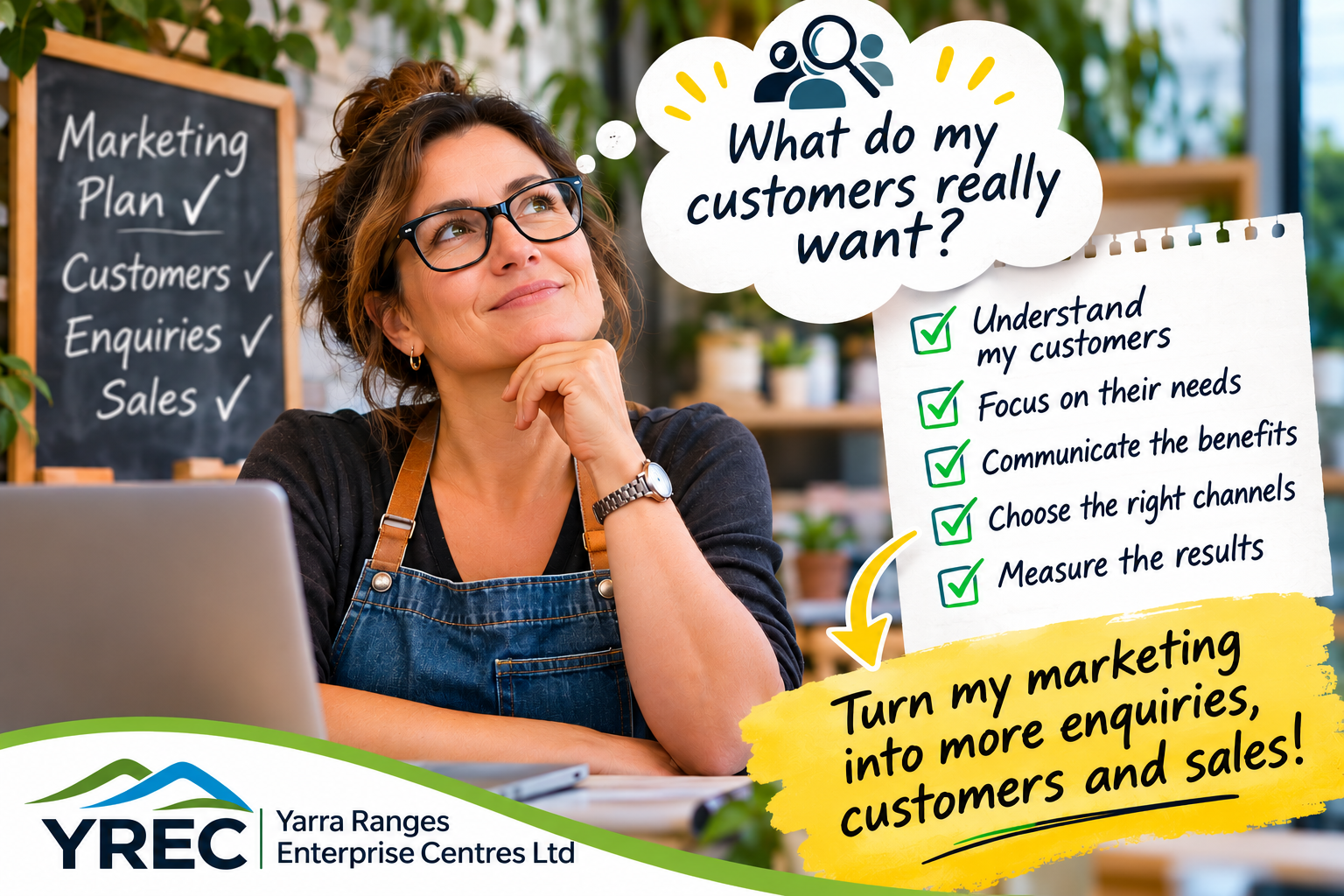
Why your advertising isn’t attracting customers — and what to do about it.
Are you spending money on advertising, posting on social media or investing in marketing but not getting the customers or sales you expected?
You’re certainly not alone!
Every day, small business owners spend valuable time and money trying to attract customers. They boost Facebook posts, run Google Ads, update websites and create social media content — often with disappointing results.
Sound familiar?
The problem isn’t necessarily that advertising doesn’t work. The problem is that too much advertising fails to connect with the people it’s intended to reach.
And there’s a very good reason for this.
It’s not how much you spend — it’s what you say!
Many business owners believe successful marketing requires a big budget, clever graphics, professional videos or a constant social media presence.
While these things can help, none guarantees success.
You can have an attractive advertisement, a great website or thousands of followers, but if your message doesn’t connect with what potential customers actually want, you’re unlikely to achieve the results you’re hoping for.
Successful marketing starts with understanding your customers — not promoting your business.
Think about that for a moment.
When was the last time you asked customers what really matters to them?
Not what you think matters, but what actually influences their decision to buy?
The biggest marketing mistake small businesses make
Look at most small business advertising and you’ll notice something interesting.
Businesses spend enormous amounts of time telling people who they are, how long they’ve operated, what they sell, how experienced they are and why they’re better than competitors.
There’s nothing necessarily wrong with this information.
But here’s the problem — potential customers aren’t initially interested in you. They’re interested in themselves!
They want to know whether you understand their needs, can solve their problems, make life easier or help them achieve something important.
In other words, they’re asking one simple question:
“What’s in it for me?”
Marketers call this WIIFM — What’s In It For Me?
It’s a question every potential customer asks, consciously or unconsciously, when seeing an advertisement, visiting a website or considering a purchase.
If your marketing doesn’t provide a compelling answer, chances are they’ll keep scrolling, click elsewhere or choose another business.
A simple example that changes everything
Imagine you’re experiencing persistent headaches and back pain and looking for someone who might help.
Consider these advertisements.
Advertisement A — Business focused
Mary Smith — Qualified Massage Therapist. 15 years’ experience providing professional massage therapy. Appointments available. Call 1234 5678.
Advertisement B — Customer focused
Struggling with Back Pain or Tension Headaches? Looking for ways to ease discomfort? Mary offers professional massage therapy tailored to your needs. Call 1234 5678.
Which is more likely to capture your attention?
Both promote the same service, but the second starts by addressing something important to the customer.
It speaks directly to their problem before introducing the business offering assistance.
That’s the difference between telling people what you do and showing them why it matters to them.
Five ways to make your marketing work harder
1. Stop guessing — ask your customers!
Before spending another dollar, find out what customers actually want.
Ask existing customers why they chose your business, what problems they wanted solved and what they value most.
Read online reviews, listen to enquiries and identify frequently asked questions.
You don’t need expensive research. Some of your most valuable marketing insights come from simple customer conversations.
2. Sell benefits, not just features
Customers rarely buy something simply because of what it is. They buy because of what it does for them.
A bookkeeper doesn’t just maintain financial records — they help business owners save time and better understand their finances.
A gardener doesn’t just mow lawns — they help homeowners enjoy their gardens without sacrificing weekends.
Explain the benefits customers receive, not simply the services you provide.
3. Speak your customers’ language
Avoid technical jargon, complicated descriptions and marketing buzzwords.
Instead of:
“We provide comprehensive digital transformation solutions for SMEs.”
Try:
“Spending too much time on paperwork? We help small businesses simplify everyday tasks and save valuable time.”
Simple, relevant messages are easier to understand and more likely to connect.
4. Choose the right marketing channels
Just because everyone uses Facebook, Instagram or Google Ads doesn’t mean they’re right for your business.
Depending on your customers, referrals, local networking, partnerships, email newsletters or traditional signage might deliver better results.
Don’t try to be everywhere. Be where your potential customers are.
5. Measure results — not just likes!
A social media post might attract hundreds of likes or thousands of views.
But how many become enquiries, bookings or paying customers?
Measure genuine enquiries, new customers, advertising costs and sales generated.
Marketing is an investment. You need to understand whether it’s delivering a worthwhile return.
Before spending another dollar…
Review your latest advertisement, social media post or promotional email.
Ask yourself:
- Who is it for? Will my ideal customer recognise its relevance?
- What problem does it solve? Am I addressing something customers genuinely need?
- Why choose my business? Have I communicated a compelling benefit?
- What happens next? Have I made responding easy?
If you can’t confidently answer these questions, your marketing probably needs attention.
The secret? Think like a customer!
Successful marketing isn’t necessarily the cleverest, loudest or most expensive.
It’s marketing that makes customers feel understood.
Customer expectations change, so keep listening, researching and adapting your messages.
Remember, your job isn’t simply to sell products or services. It’s to help customers make confident decisions about solutions that meet their needs.
Here’s my challenge to you…
Before creating your next advertisement or spending another dollar on marketing, ask yourself:
“Am I telling people about my business — or giving them a compelling reason to become my customer?”
The answer could make a significant difference to your results.
Want to make your marketing work harder?
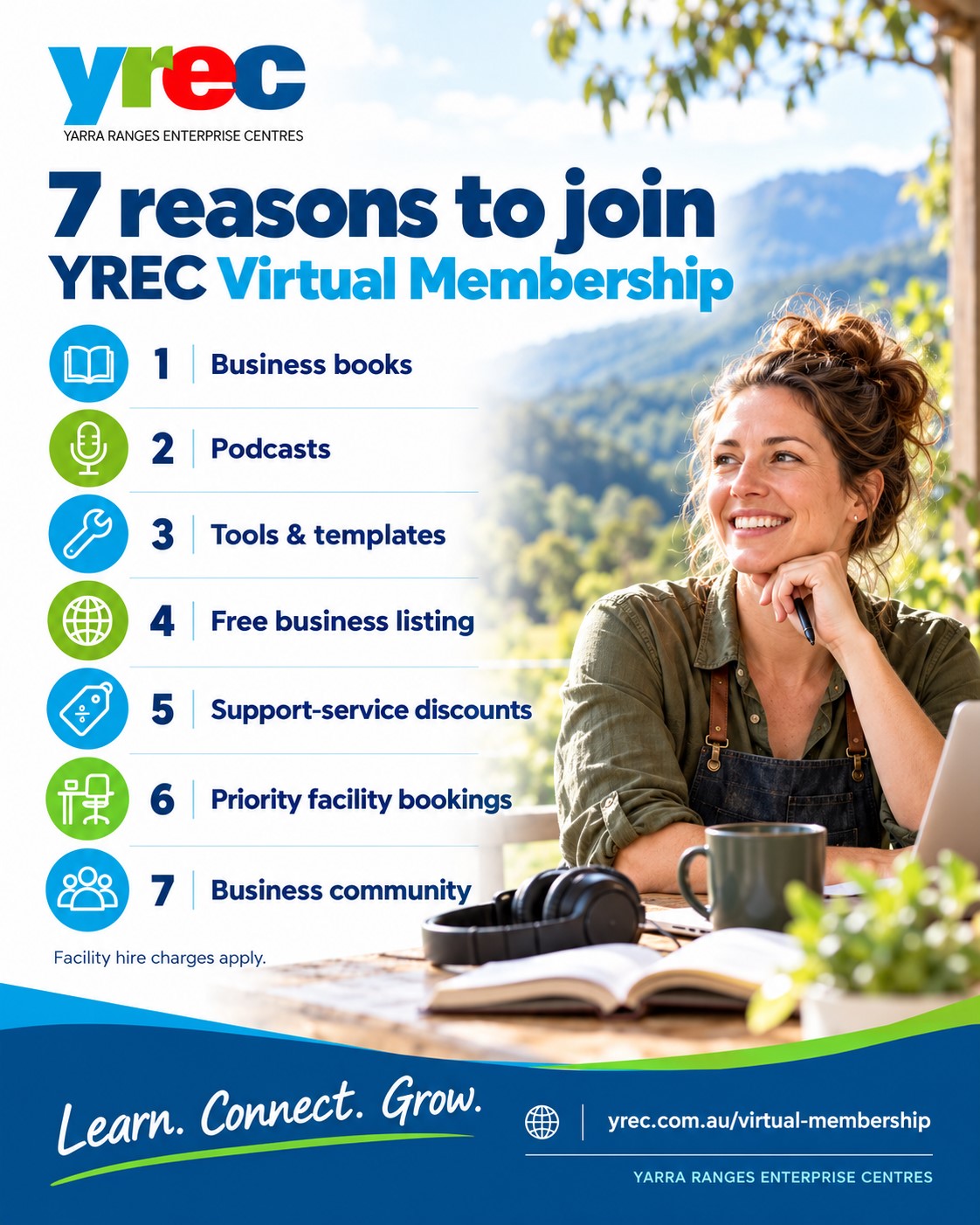
Yarra Ranges Enterprise Centres Ltd (YREC) helps small business owners build stronger, more sustainable businesses through practical workshops, business resources, tools and support.
Become a YREC Virtual Member and gain access to all our resources including a Workbook designed to help you implement the ideas in this article at https://yrec.com.au/virtual-membership/#join.